In the intensely competitive world of today's pro-level drifting, success is not merely purely a function of sheer horsepower or behind-the-wheel bravado. Rather, it has become a complex engineering challenge which requires a scrupulous fusion of selecting a inherently capable car, equipping it with the correct performance parts, and, most critically, comprehending its real-time characteristics on the track through sophisticated vehicle dynamics analysis tools. This comprehensive manual will serve as your blueprint starting from the very first concept of a project car through to the final telemetry-optimized refinements that turn a strong machine into a predictable champion. We will delve deep into the precise engineering of chassis dynamics adjustment, showing how a modern suspension tuning tool like a dedicated telemetry system eliminates assumptions and delivers unparalleled insight into your car's actual behavior.
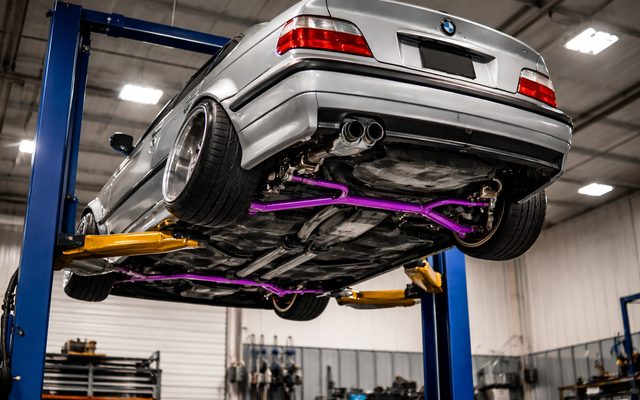
The bedrock of any exceptional drift machine is, undoubtedly, the platform itself. A select group of cars have earned legendary status within the global drifting culture due to their built-in handling characteristics, durable design, and the immense range of aftermarket support available. Selecting the right platform is the initial and most important decision a driver will make. To illustrate, the the E36 generation BMW is widely regarded as among the greatest overall drift cars of all time. Its near-perfect 50/50 weight distribution, coupled with a RWD layout and bulletproof inline-six powerplants, establishes a platform that is simultaneously forgiving for beginners and incredibly effective in the control of a professional competitor. The successor of this lineage, the BMW E46, refines these attributes with a more developed structure, broader wheel track for improved confidence, and still more turning capability straight from the OEM. A distinct formidable option in the pro scene is the C6 generation Corvette.
This American track weapon brings a particular set of strengths to the drifting discipline, including a light aluminum frame, a backwards-positioned gearbox and differential unit that contributes to an ideal weight distribution, and the tremendous thrust of a big LS-series V8 engine. This blend transforms it into an absolute monster on track, designed of starting and sustaining long slides with relatively effortless use of acceleration. For those looking for outstanding performance per dollar, the Nissan 350Z rises above as a excellent example. It comes from the manufacturer with a robust chassis, a effective factory locking differential, and the smooth VQ series motor that offers plenty of performance for mastering and progressing in the sport. Its successor, the 370Z model, presents additional improvements in chassis stiffness, handling precision, and overall engine power, cementing its status as a popular choice among serious drivers. Further legendary cars that merit mention include the nimble Wankel-engined Mazda FC RX-7, the ever-present S13 Silvia/240SX, the American Ford SN95, the electronic-equipped E90 3 Series, and the tiny yet surprisingly engaging and teachable Mazda MX-5. Every single one of these platforms gives a distinct array of attributes, complexities, and possibilities, but they all have in common the fundamental ingredients necessary to become a capable drift car.
However, choosing the optimal car is just the beginning. To release the full performance of any of these machines, significant changes to the steering and suspension systems are utterly mandatory. This is where the domain of specialist aftermarket components enters sharp focus. The most most impactful improvement for a purpose-built competition vehicle is the fitting of a maximum-angle angle modification kit. These engineered systems, such as those developed by specialist companies like specialist manufacturers, are created to dramatically increase the chassis's maximum lock-to-lock rotation. A factory street car is extremely limited in how far its tires can rotate, a engineering limitation for daily use. In sliding, however, aggressive steering input is frequently necessary to control and hold a angle. An modification kit replaces the stock uprights, linkages, and often A-arms with parts that permit the front tires to attain degrees of turn over 70 or even 80 degs, compared to a average OEM limit of around 40 to 50 degrees.
This vastly expanded steering angle offers the pilot with exponentially enhanced authority during a angle, making it considerably simpler to begin a slide, hold it through a long turn, and transition seamlessly from one side to another. The contrast in handling is nothing short of transformative. Combined with a properly chosen modification is the equally essential enhancement to the vehicle's damping system. Generic or including premium street adjustable suspension are simply not intended for the specific and brutal needs of drifting. A drift-spec set of coilovers is of utmost importance. These specific suspension components incorporate custom damping rates and spring rates that are tuned for the extreme load shifting that is characteristic of aggressive driving. When a operator starts a drift, the car's mass is thrown forcefully to the outer of the bend. Proper competition dampers handle this transfer in a predictable manner, allowing the car to find its balance promptly and giving the driver clear feedback through the wheel and driver's seat. They additionally allow for precise tuning of ground clearance, rebound and compression firmness, and weight balance, which are all fundamental elements of fine-tuning the vehicle's handling to a specific track or driving style. Together, a high-quality drift angle kit and a properly chosen pair of competition adjustable dampers form the core hardware base upon which all later tuning is built.
Once the essential components is installed, the next vital stage in the project is the meticulous tuning of the chassis's alignment. This is the domain of car suspension tuning, a process that can appear overwhelmingly complex to the beginner but is, in practice, the defining factor to transforming a assembly of high-performance components into a unified and consistent machine. The most discussed element of alignment for oversteer is certainly negative camber. Camber angle is the angle of the rim in relation to the perfectly straight axis when looked at from the forward of the chassis. When the upper part of the wheel is angled towards the chassis, this is called negative camber. In oversteer driving, inward-leaning wheels on the front wheels is widely applied and is regarded as critical. The purpose is deeply related to vehicle dynamics.
When a car is cornering at limit sideways angles, the chassis rolls toward the outside of the bend. This lean makes the outside front wheel to reduce its optimal grip area with the track surface. By adding negative camber, the wheel is pre-leaned to compensate for this lean. As the chassis leans into the corner, the outside front tire flattens out against the track, optimizing its bite at the precise moment when it is most required for directional command. Commonly, front camber settings for a serious drift machine fall between approximately -3 degrees to as much as -5 degrees or even more, depending on the details of the car geometry, compound selection, and pilot feel. The rear tires also use inward tilt, but the settings are generally more conservative and less aggressive than the front. Excessive camber at the back can cause the vehicle to overly prone to oversteer and challenging to control on power input, as it diminishes the effective grip area of the powered wheels during linear power delivery. Therefore, rear adjustments are often in the ballpark of -1 degree to -3 degrees, finding a delicate balance between providing adequate lateral grip to help in initiating and holding the slide while simultaneously keeping usable grip for acceleration the corner. alignment is only one component of the more complex alignment picture, which additionally includes toe setting, caster angle, and suspension-induced steering modification.
Toe describes the orientation of the tires when viewed from above. Positive toe means the front edges of the wheels are closer together than the trailing edges, while outward toe means the opposite. For drifting, a slight amount of front axle toe out is frequently used to sharpen the initial directional reaction, making the vehicle feel more nimble and willing to initiate a oversteer moment. Rear axle toe setting is usually set to zero or a incredibly small amount of inward toe to promote stability under throttle. caster angle is the longitudinal or aft angle of the steering axis when observed from the lateral of the car. Positive caster angle improves steering feel and stability confidence, and it also boosts negative camber effect during turning, which is highly advantageous. Adjusting these values is a complex dance where a adjustment to a single parameter can and often will impact the others. The old-school method for tuning a car's suspension geometry for drifting has historically been a time-consuming process of experimentation and feeling. A pilot or team would introduce a modification based on intuition, drive the chassis on track, use the driver's individual sensation and feedback, and then introduce a further adjustment. This process would continue over and over until the chassis felt "right" or the scheduled testing time ended. This approach is not just extremely inefficient in terms of hours and resources, but it is furthermore inherently inaccurate.
Pilot perception is a famously inconsistent metric, influenced by countless elements such as tiredness, varying track conditions, weather, and just the mood of the operator on that given session. What feels "loose" on one pass might feel "understeery" on the next pass, resulting in conflicting data and counterproductive changes. This age-old limitation in vehicle dynamics optimization is precisely where state-of-the-art telemetry systems has intervened to completely change the process.
The rise and integration of sophisticated vehicle dynamics tools has brought about a new era for building and perfecting professional drift machines. These systems, showcased by groundbreaking solutions like modern telemetry hardware, function by actively capturing the real-time dynamic performance of the car as it is being driven on the course. In contrast to relying on driver impression, these tools acquire quantifiable data on essential factors such as shock absorber movement, corner velocities, acceleration forces, steering angle, and throttle and brake application. This acquired telemetry is then interpreted by advanced algorithms that can visualize and interpret the metrics in a actionable way. For the first time, tuners and builders can visualize precisely what the car is exhibiting at each moment of a drift. This function revolutionizes the whole alignment optimization process. Imagine the particular goal of optimizing the front camber for a particular vehicle. Instead of introducing a modification from -3 degrees to -3.5 degrees and then running many passes to try and "sense" a change, a vehicle dynamics tool can deliver instant and irrefutable feedback. The software can indicate in a chart how the wheel's grip is behaving during the critical moments of a angle: turn-in, sustain, and transition. It can demonstrate if the present angle is permitting the loaded tire to keep optimal loading or if the tire is over-stressed on its external shoulder.
The software can then make empirical suggestions for change. Perhaps the telemetry indicates that the tire is still stressing its edge at -3.5 degrees of negative camber, indicating that an increase to inward lean, say -4 degrees, might be warranted. Alternatively, the information might indicate that the tread is not coming up to temperature or that the inner edge is wearing excessively, which could point to that there is excessive inward lean and a slight decrease back to -3.2 degrees would be more optimal. This degree of accuracy and useful analysis was completely impossible in the era of solely manual setup.
The benefit of employing a dedicated vehicle dynamics tool extends well beyond just optimizing alignment. It becomes an invaluable coilover setup tips that is tailored to your particular chassis. When setting the shock absorber clickers on your adjustable dampers, rather than using vague tips or replicating another car's setup, you can utilize the data to analyze car alignment tuning how the chassis is behaving in relation to your tweaks. The software can display the damper movement data over a section of track, revealing if the dampers are managing the body movement optimally or if they are causing the car to bounce excessively after a direction change. It can aid in pinpointing challenges like bottoming out or losing droop, allowing you to apply educated choices to preload settings, rebound/compression settings, or ground clearance. This methodology translates just as well to the intricate task of suspension geometry optimization. Beyond camber, the system can provide insight into how modifications to toe settings and caster angle are impacting the vehicle's stability during different parts of a lap. For instance, it can assist you to find the best amount of front toe-out for your specific angle kit configuration and piloting style by showing the speed of turn-in response and the consistency of the chassis at lock lock. This makes the system an exceptionally effective vehicle dynamics manual that is actively updated by the actual dynamics of your personal car on the track. It elevates the complete process from a subjective skill into a repeatable development exercise.
Furthermore, the application of a platform like GripDial is in no way limited to experienced engineers with vast resources. For the club-level competitor, it acts as an incredible educational tool. It practically offers the driver with the analysis of a full-time race engineer without requiring the corresponding expense. It accelerates the tuning process by providing definitive solutions to challenges that would traditionally take seasons of experimentation to answer. A tuner can learn how their individual car behaves to different settings, building a more profound comprehension of car control in the endeavor. It furthermore makes accessible professional suspension engineering principles, allowing every enthusiast with the ambition to refine their car to achieve it in a efficient and successful manner. This is particularly important in a discipline like oversteer competition, where engineering know-how has traditionally been a tightly held asset among elite drivers. Now, that capability can be in the garage of every serious enthusiast.
In conclusion, the path to constructing and dialing in the perfect high-performance sliding vehicle is a comprehensive project that seamlessly combines proven hardware principles with revolutionary telemetry technology. It starts with the informed choice of a capable platform, followed by the installation of essential drift-spec parts like high-performance drift angle kits and expertly specified drift-spec coilovers. The process then progresses into the detailed stage of chassis dynamics adjustment, where settings like negative camber, toe setting, and caster are meticulously vehicle dynamics tool set to suit the chassis's upgraded geometry and the operator's specific technique. Ultimately, and what really differentiates the today's approach from the past, is the use of a advanced suspension tuning application. This platform removes the uncertainty and waste of only subjective setup by delivering quantifiable, live telemetry on how the car is actually functioning. It functions as an unparalleled diagnostic aid, a comprehensive drift suspension tuning guide, and a master vehicle dynamics tool. As a complete package, this integrated methodology leads to that each and every drift suspension tuning guide component of the drift machine—from the selection of the car to the last tweak on the coilover—is optimized for ultimate competitiveness on the track. It embodies the full progression of the discipline of drifting, connecting physical pilot talent with surgical suspension engineering to build the most dominant machines attainable.